
Tile trends for 2027 are small tiles laid over whole walls, characterful natural stone, fluted and woven textures and richer colours such as chocolate, caramel, claret and plum. The clearest 2027 forecast from a UK tile company so far came from Mandarin Stone on 20 November 2026, and most of its six themes have one thing in common. They take more care to fit than a plain white wall tile, because they are heavier, have more joints or need setting out before the first tile goes on. This guide goes through each trend with what it means for the wall and the fitting.
What are the tile trends for 2027?
Mandarin Stone's 2027 forecast names six themes:
| Trend | Examples it gives |
|---|---|
| Small pattern, big impact | Octagon and herringbone marble mosaics, zellige and small porcelain mosaics across a whole wall |
| Characterful stone | Ceppo and tumbled marble, terrazzo, and stone and travertine look porcelain |
| Texture beyond the expected | Fluted marble, woven look porcelain and crazy paving limestone |
| A richer neutral | Honey travertine look and earthy concrete look porcelain, in chocolate, caramel, espresso, olive and plum |
| Unexpected pairings | Mixed pattern porcelain and harlequin layouts in two marbles |
| Detail | Marble skirting, tiled cornices and stone inlays laid on the diagonal |
Most other UK tile sellers had only their 2026 trends up when we checked. Our bathroom trends guide covers warm stone tiles, patterned floors and fittings for 2027 bathrooms, so this page sticks to the tiles themselves.
Small tiles and mosaics: more joints, more time
Mosaics and small tiles across a whole wall look calm once they are up, but every one of those joints is grouted by hand. A square metre of 50 mm tiles has about 40 m of grout line, against about 3.3 m for 600 mm tiles, roughly twelve times as much, and every cut round a socket, window or pipe is a small one. Zellige tiles are glazed terracotta made by hand in Morocco. Each one varies in size and surface, which is the point of them, so they are laid with joints that allow for the variation and are never perfectly flat. Expect a mosaic or zellige wall to take noticeably longer than plain tiles of the same area, and ask for the labour to be priced per square metre for that tile, not for tiling in general.
Stone and big tiles: check the weight first
Natural stone and thick porcelain are heavy, and a wall can only carry so much. British Gypsum's tiling guidance gives a limit of 20 kg per m² on its Thistle finish plaster, counting the tiles, adhesive and grout together. Our guide to plasterboard tile weight explains how the limits differ for each board and finish.
The tile's data sheet gives its weight, either per tile or as a density. Worked out per m² from real UK data sheets, read on 21 November 2026:
| Tile | Weight of the tile alone |
|---|---|
| Porcelain 600 × 300 × 10 mm: 3.78 kg a tile, 5.56 tiles per m² (Walls and Floors) | about 21.0 kg per m² |
| Porcelain 600 × 600 × 10 mm: 7.70 kg a tile, 2.78 tiles per m² (Walls and Floors) | about 21.4 kg per m² |
| Calacatta marble, 10 mm: density 2,680 kg per m³ (Mandarin Stone data sheet) | about 26.8 kg per m² |
| The same marble, 12 mm | about 32.2 kg per m² |
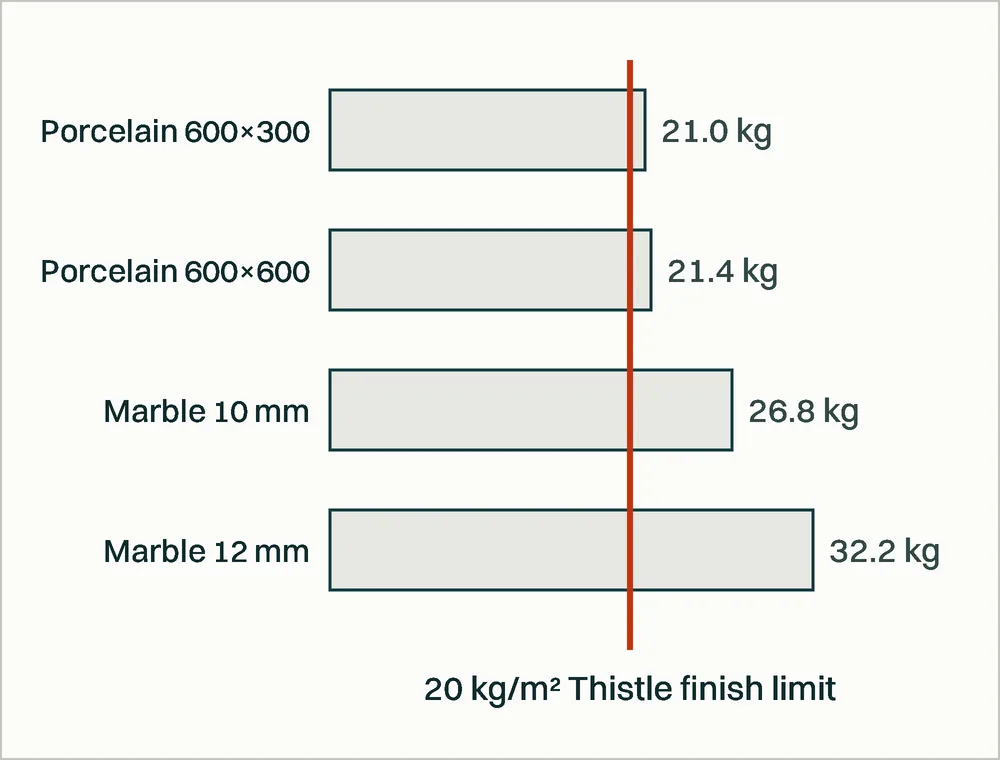
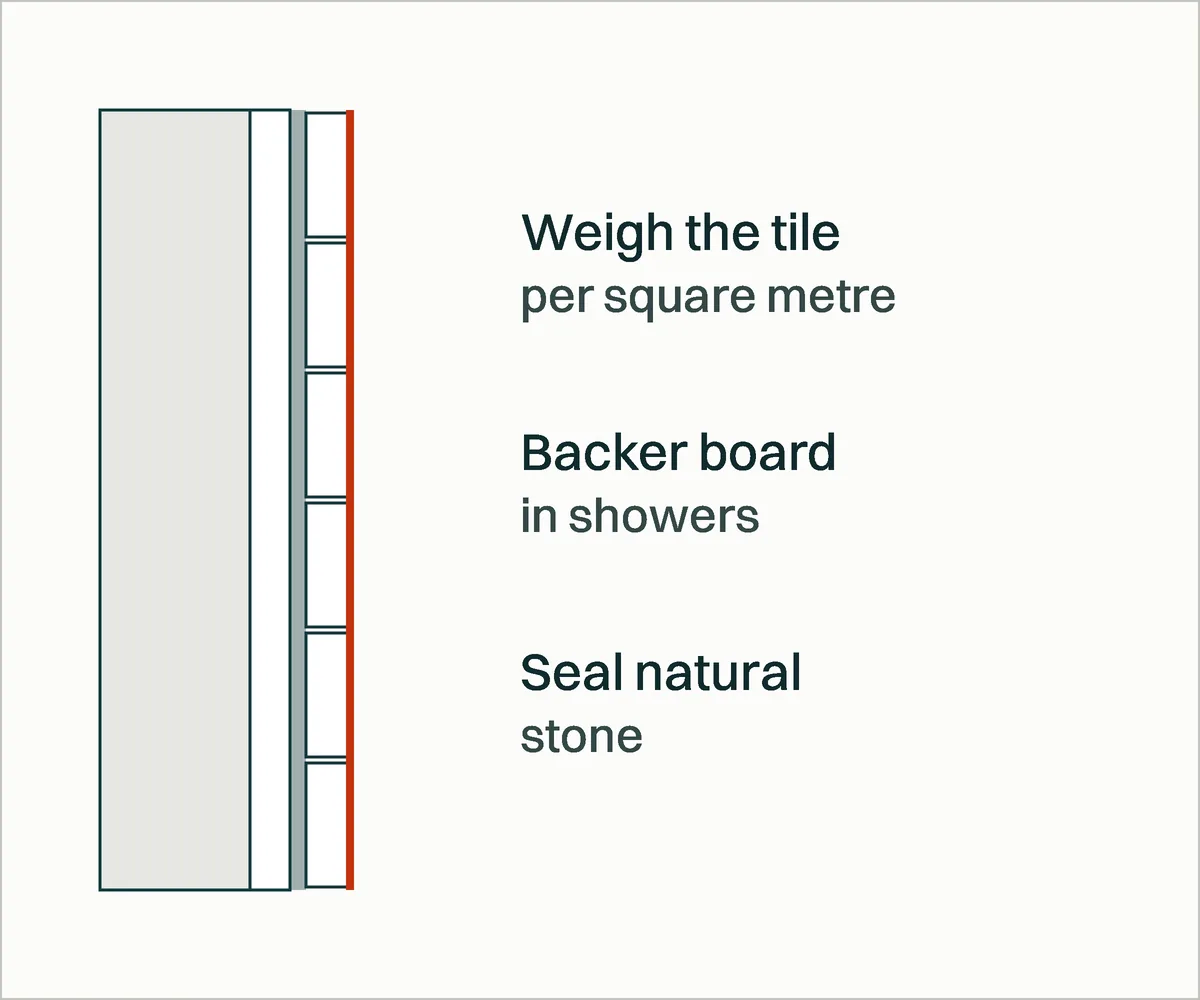
Even before the adhesive goes on, both 10 mm porcelain tiles are over the 20 kg limit for Thistle finish plaster. Stone on a plastered or skimmed wall is the combination to question. The usual answers are a lighter tile, or a tile backer board made for the weight. In showers and wet areas we tile onto cement or tile backer board and tank it, never onto standard plasterboard. Our guide to waterproofing before tiling covers the tanking.
Natural stone also has to be sealed, because it is porous and stains. Tumbled marble and limestone in particular soak up grout colour, so they are usually sealed before grouting as well as after. Follow the stone supplier's sealer and the number of coats it gives.
Fluted, harlequin and inlaid tiles: setting out
Fluted tiles need a wall that is flat and plumb, because any lean shows along the flutes. Harlequin layouts, diagonal inlays, chequer borders and tiled skirting all need setting out on the wall before fixing starts, so the pattern is centred and the cuts at the edges are even. That means more cut tiles, so order more spare than you would for a plain layout, and agree where the pattern starts and finishes before the tiler begins.
Which 2027 tile trends suit a bathroom?
The richer neutrals, such as honey travertine look porcelain, are the easiest. They come in standard sizes and weigh the same as other porcelain. Small mosaics and natural stone suit one feature wall or a shower niche, where the extra fitting time is limited to a small area. The weight check above still applies to that wall. A whole bathroom in tumbled marble is beautiful, but it is the most expensive to fit and needs resealing from time to time.
Getting a wall or floor tiled
Send us the tile you are looking at, with its size, thickness and weight per m² if you have the data sheet, and a photo of the wall it is going on. Tell us whether it is in a shower or a wet area. We check the wall can carry it and reply the next working day. Read more on our wall and floor tiling page, or send the tile details.