
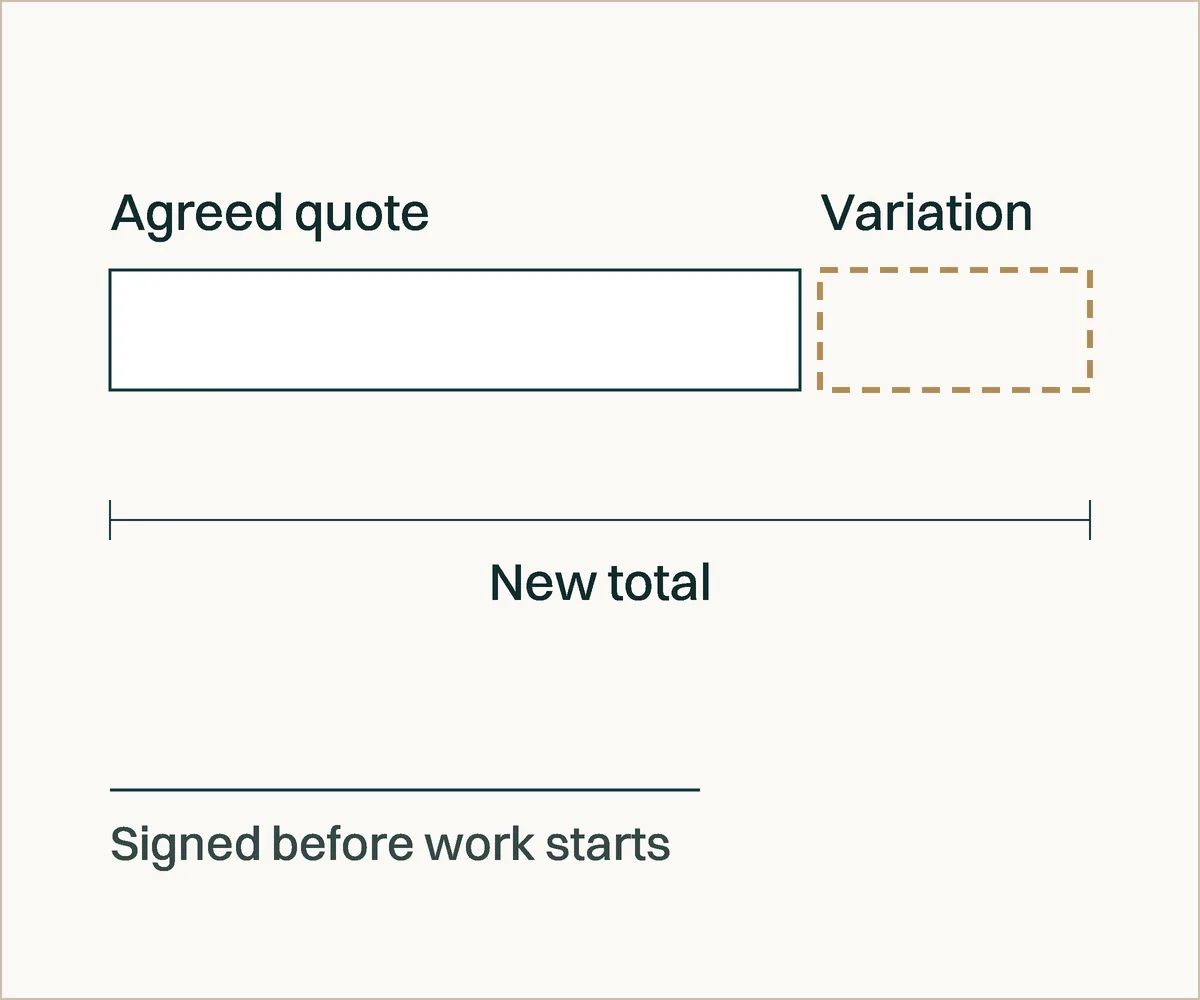
A variation is a change to the work in the agreed quote: something added, swapped or left out. The written instruction for it is often called a variation order. Designing Buildings describes it as "an alteration to the scope of works, in the form of an addition, substitution or omission". It can change the design, the quantities, the quality or the order of the work. Agree each one in writing before the work is done, with its price and its effect on the finish date.
What should a written variation show?
A written variation should show the reason, the work, the quantity, the price, the time, who supplies what, what is left out and who accepted it.
| Part | What it should say |
|---|---|
| Reason | What changed, and why the original price did not cover it |
| Extra or omitted work | Each task, in the order it will be done |
| Quantity and unit | Lengths, areas or numbers, and whether they will be measured again |
| Price | The amount and how it was worked out: quoted rates, a lump sum or daywork |
| Time | Extra days or shifts, and any change to the finish date |
| Who supplies what | Materials, access equipment and waste |
| Not included | Related work that is still excluded |
| Acceptance | A name, a date and a signature before work starts |
What does a real variation look like?
This example is a variation our director prepared for a labour-only ceiling job. The amounts are left out.
The original quote covered a flat plasterboard ceiling, priced by area. After the drawings were clarified, parts of that ceiling had to drop to meet a different type of ceiling beside it. That created a long run of narrow vertical edges and a bulkhead, which the price per square metre had never included.
The variation gave that reason, then listed the extra work: setting out the drops, adjusting the hangers, extra framing, narrow board faces, beads, filling, sanding and painting. It priced the edges as a lump sum against a stated length, and the bulkhead by the linear metre. It said how many extra shifts the work would take and set them out by stage. It named what was not included, such as electrical work, access equipment and waste, and it said the flat ceiling in the original quote was not being charged twice. It ended with a line for written acceptance before the work went ahead.
How is a variation priced?
By agreement, in one of three usual ways: the rates already in the quote where the work is similar, a new quoted price that you accept, or recorded time and materials on a daywork sheet. If the change replaces a provisional sum, that allowance is removed and the actual cost takes its place.
When is a change not a variation?
- Work that was in the quote and the drawings but got missed. That is the builder's to finish.
- Putting right poor work. That is a defect.
- Something that was only discussed. A spoken agreement can still count, but without a written record it comes down to one person's word against the other's.
If you are planning work and want changes handled this way, say so when you get in touch. We reply within one working day. Tell us about your job.