
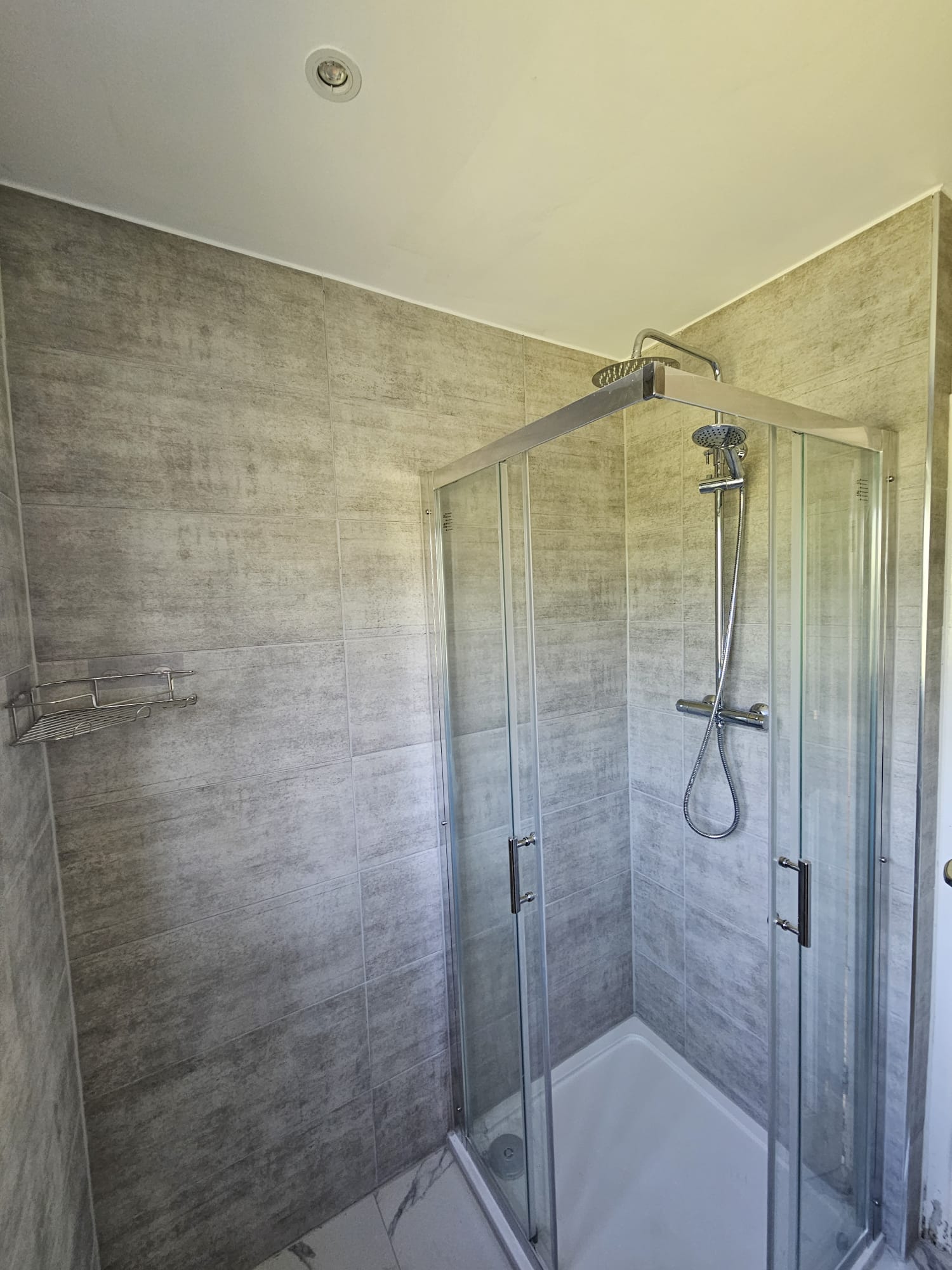
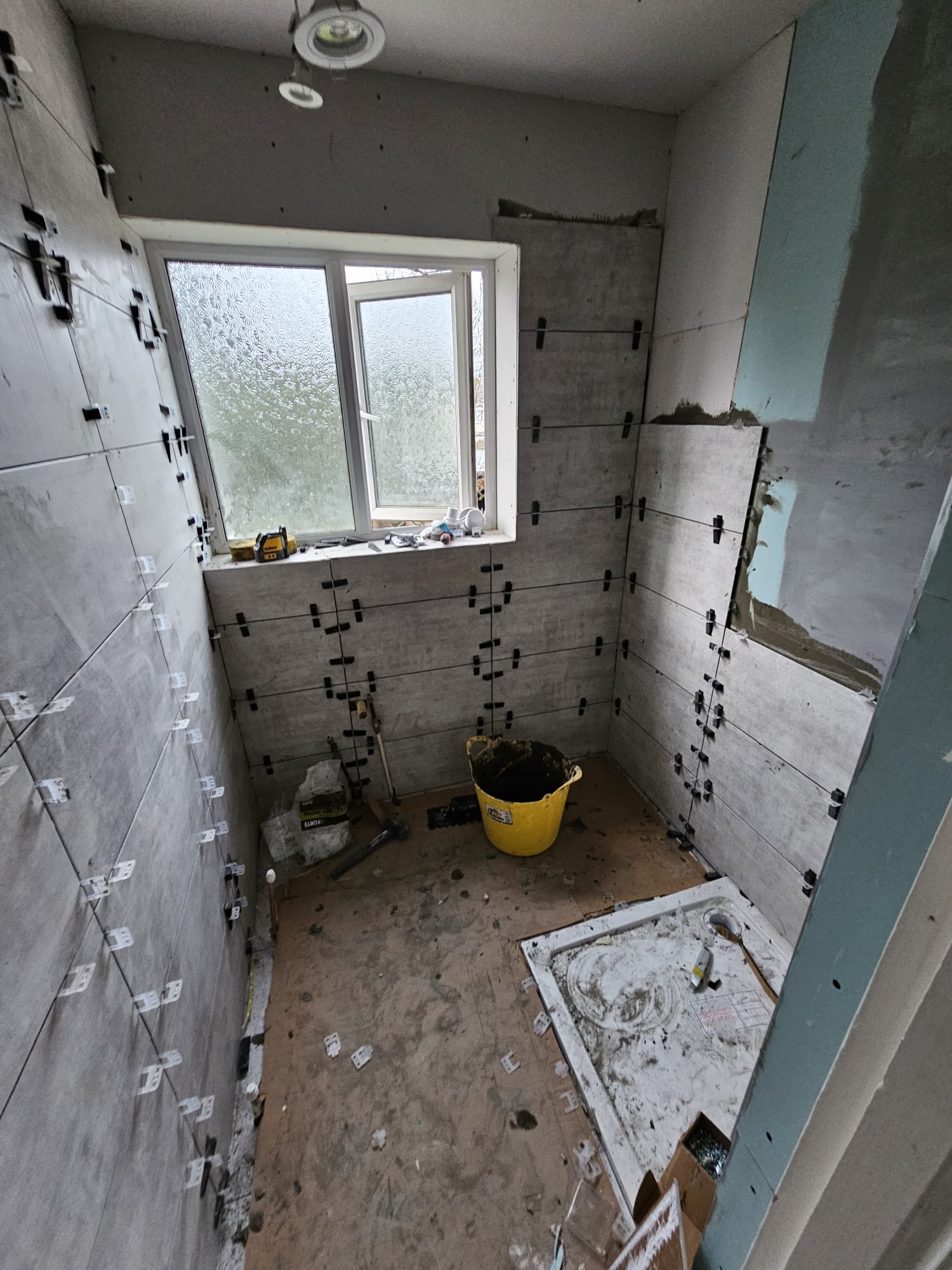
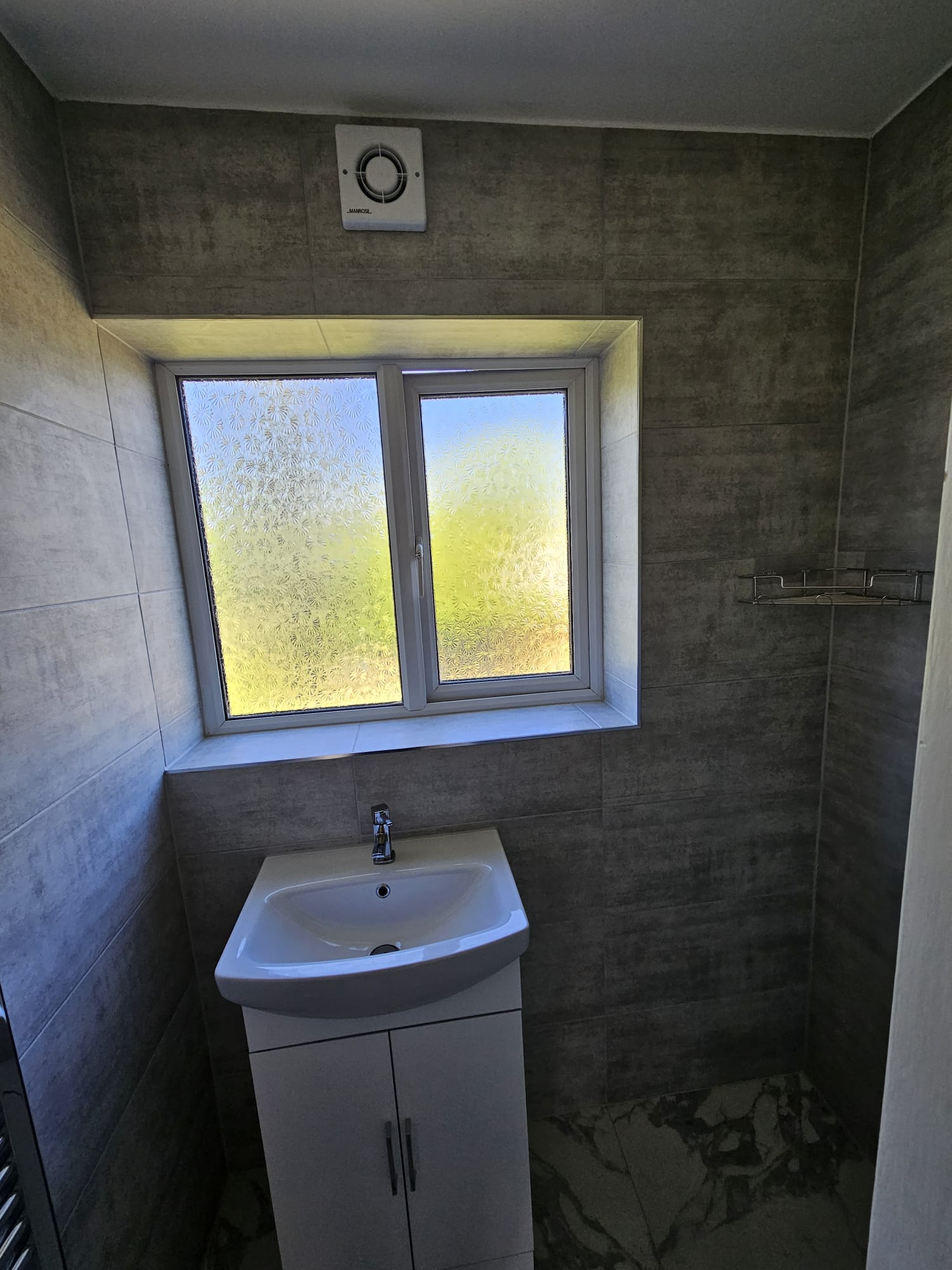
A budget bathroom renovation in London typically costs £4,500 to £7,000 supplied and fitted, for a small bathroom or shower room where the layout stays as it is. The photographs in this guide come from one job, a shower room refitted on a budget in an HMO in East London. The prices below are typical London ranges for planning, and we price each bathroom after seeing the room or photographs of it.
Typical budget bathroom prices in London
| Job | Typical London price |
|---|---|
| Budget refit of a small bathroom or shower room, same layout | £4,500 to £7,000 supply and fit |
| Mid-range refit, better fittings or a small layout change | £7,000 to £12,000 |
| Labour share of a straightforward refit | £2,000 to £4,000 |
| Typical UK bathroom project, for comparison | About £7,000 |
When two quotes look far apart, the gap is usually VAT, materials or the strip-out, so check what each one includes. Our bathroom fitting cost guide breaks down two fully priced examples line by line.
Keeping the layout saves the most
Where the water comes in and the waste goes out affects the price more than any tile or tap. If the toilet, basin and shower stay where they are, the plumber connects the new fittings to the existing pipes. Moving a toilet means moving the soil pipe, which can cost more than the toilet, basin and tap together.
Where a budget bathroom can save
- Large-format tiles are quicker to lay because there are fewer joints to set out and grout. The grey concrete-effect wall tiles in the photographs are a large format.
- A standard-size shower tray with a corner sliding enclosure costs much less than made-to-measure glass.
- A vanity basin unit hides the pipework and adds storage for less than a separate basin and cabinet.
- Trade-range chrome fittings, such as a towel radiator, a bar shower and a basin mixer, do the same job as designer ranges for much less money.
- Marble-effect floor tiles give the look of stone for a fraction of the price, and glazed tiles need no sealing.
- Tiling the wet areas and painting the other walls with bathroom paint saves days of labour compared with tiling every wall from floor to ceiling.
Where to spend
- Waterproof the shower area properly, with moisture-resistant boards and tanking. It costs little compared with tracing a leak through the ceiling below.
- Fit a good extractor fan. Without one, a bathroom grows mould however much it cost.
- Choose a thermostatic shower valve, which holds its temperature when someone runs a tap elsewhere in the house. Cheap manual valves are a common disappointment in budget bathrooms.
- Get the first-fix plumbing right before the tiles go on, because the pipework is hidden behind them afterwards.
- Take time over the grout and silicone, which decide how the finished room looks and how long it stays watertight.
The East London shower room in the photographs
The room was stripped out, boarded with moisture-resistant board and re-plumbed before tiling. The walls have grey concrete-effect tiles and the floor has marble-effect tiles. Every fitting is a standard size: a stock tray with a corner sliding enclosure, a bar shower with a rain head and handset, a vanity basin unit, a chrome towel radiator and an extractor fan above the window.

Budget bathrooms for landlords and HMOs
A rental bathroom earns nothing while it is stripped out, so the length of the job matters as much as the price. Stock fittings keep the job short and make later repairs simple, since a cracked tray or a failed valve can be swapped for the same part. HMO licensing inspections often pick up mould and poor ventilation, so good extraction and wipeable surfaces are worth paying for.
How long it takes
A straightforward refit with the layout unchanged usually takes one to two weeks. The strip-out and first fix take the first few days, boarding and tiling fill the middle of the job, and the fittings, grout and silicone go in at the end. Moving walls, windows or the soil pipe adds time as well as cost.
Budget bathroom fitting in London with Vayton
We renovate bathrooms across London, from budget refits in rented homes and HMOs to family bathrooms. See our bathroom renovation in London page, or send us photographs of your bathroom for a price.
Common questions about budget bathrooms
How much does a budget bathroom renovation cost in London?
Typically £4,500 to £7,000 supplied and fitted, for a small bathroom or shower room where the layout stays the same. Larger rooms, layout changes and premium fittings cost more.
Can a budget bathroom still look good?
Yes. Neat grout lines and a single metal finish for the taps, shower and radiator make the biggest difference. The room in the photographs uses trade-range fittings and large-format tiles.
Is it cheaper to keep the bathroom layout?
Almost always. Leaving the toilet, basin and shower where they are avoids rerouting the pipework and the soil pipe, which is some of the most expensive work in a bathroom.
Where should you avoid cutting costs?
Waterproofing, the shower valve, extraction and the plumbing behind the tiles. Faults in any of them are expensive to put right once the room is finished.