
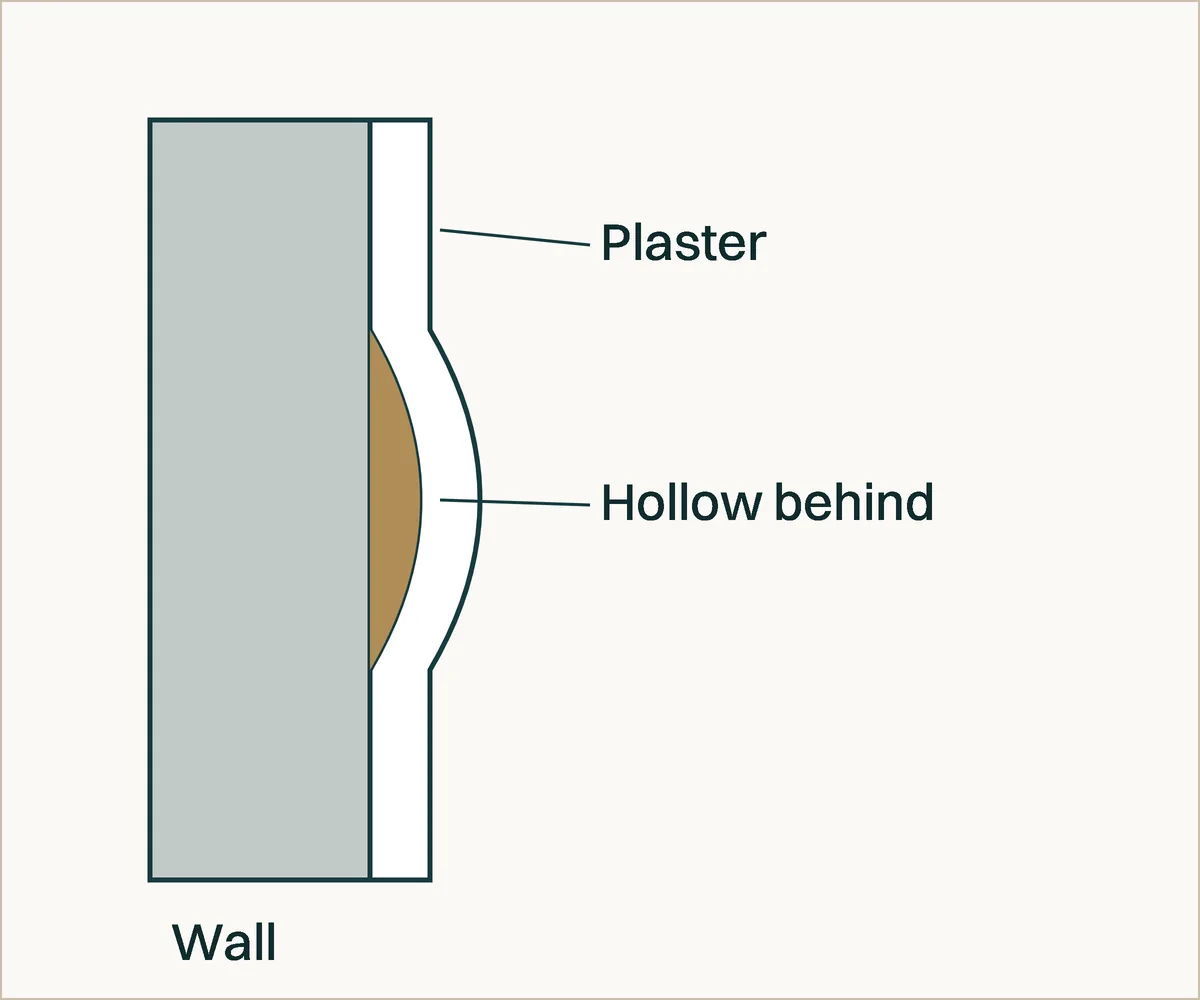
Blown plaster is plaster that has lost its grip on the wall or ceiling behind it. It may look fine, but it sounds hollow when tapped and it can bulge, crack or come away in pieces. The SPAB lists "loose plaster or delaminating coats (perhaps because of poor keying)" among the usual ways old wall plaster fails.
How can you tell if plaster is blown?
On a wall, tap lightly with your knuckles or the handle of a screwdriver. Sound plaster gives a solid, dull note. Blown plaster sounds hollow, and the edge of the hollow area can usually be traced by tapping outwards from it. Other signs:
- a bulge you can see when you shine a torch along the wall
- cracks around the edge of a patch
- on a wall, plaster that moves when pressed lightly. Do not press or tap a bulging ceiling
- crumbling, staining or white salts on the surface, which point to damp
What causes blown plaster?
Usually damp, a poor key or age.
| Cause | What to look for |
|---|---|
| Damp | Staining, crumbling or flaking, often low on a wall, below a window or on a chimney breast. The SPAB names rainwater getting in as a cause of this kind of damage. On chimney breasts, salts from old fires can keep the plaster damp; see paint bubbling on walls |
| Poor key | Plaster applied to a surface it could not grip, such as a painted or glossy wall without a bonding coat |
| Age and movement | Old plaster loosening after decades of small movements in the building |
| Broken nibs on a ceiling | On old ceilings, the small keys of plaster that grip the laths can snap after a leak. Our lath and plaster guide explains how |
Does blown plaster have to be replaced?
Often only in part. For old wall plaster, the SPAB says deterioration "frequently looks worse than it is" and that repair rather than replacement is commonly possible. Small hollow patches on an otherwise sound wall can be cut out and patched. Larger areas are cut back to firm edges and replastered.
On older solid walls the patch should match the original plaster, which is often lime, and the paint over it should let the wall breathe. Our guide to lath and plaster covers which finishes suit lime. Historic or fragile plaster can sometimes be fixed back with screws and washers instead of being removed.
Deal with the cause before any repair. Replastering a damp wall before the damp is cured brings the problem back. Our guide for landlords on Awaab's Law and damp repairs covers the rules for rented homes.
Is blown plaster on a ceiling dangerous?
Yes, a loose patch can fall, and old lath and plaster is heavy. If a ceiling bulges, sounds hollow over a wide area or has dropped at a crack, keep people out from under it and have it checked. A surveyor, an engineer or an experienced plasterer can tell whether it needs fixing back or taking down.
Before cutting out plaster in an older building, check whether a textured coating on it could contain asbestos. Our guide to cracks in a ceiling explains the caution.
Tell us which wall or ceiling sounds hollow, roughly how big the area is and whether the building has had any damp. We reply within one working day. Describe the problem.