
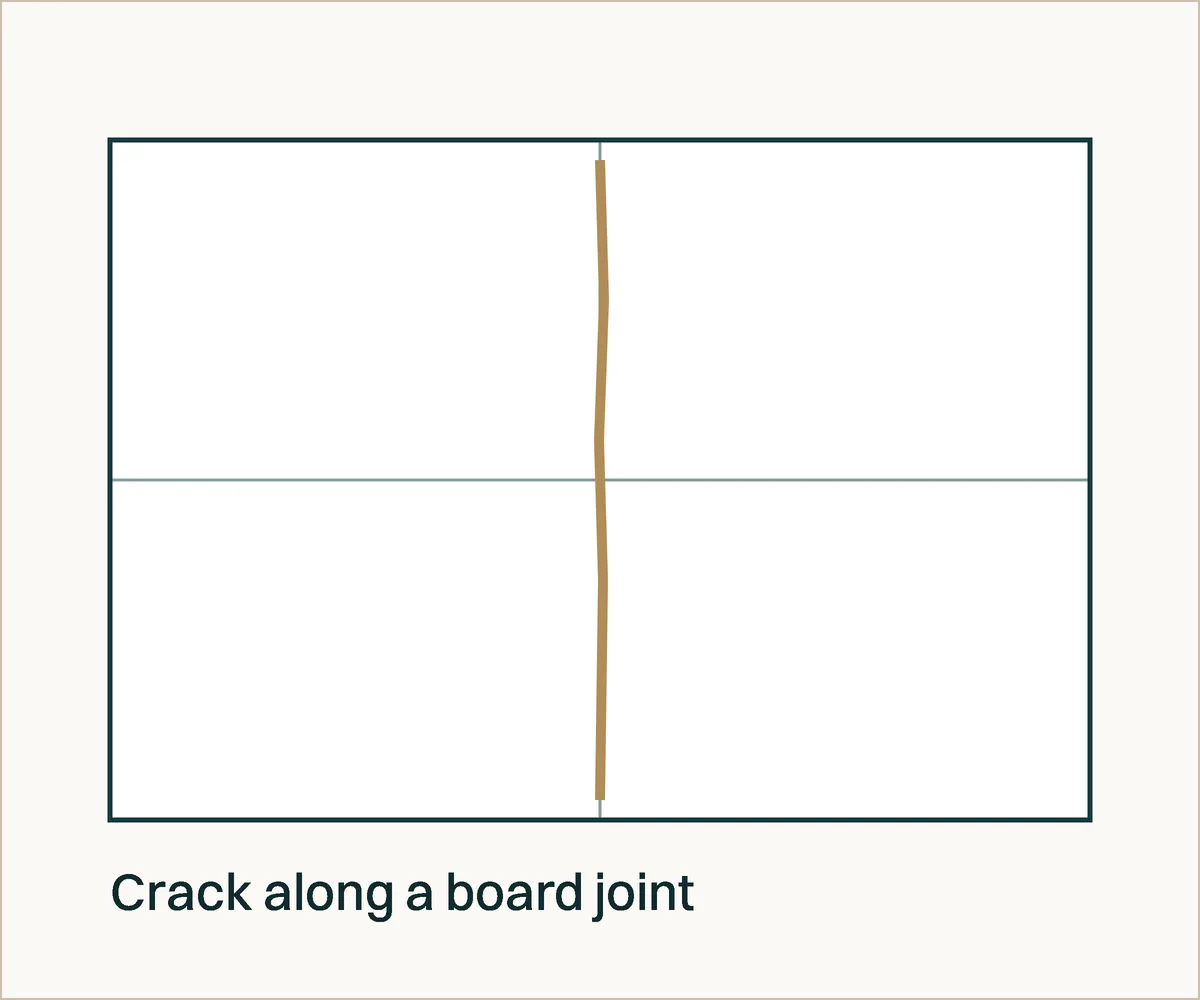
Fine cracks in new plaster are common. Dulux's guide to paint problems calls cracking of plaster "a common occurrence in new houses" and says it is "often the result of plaster drying out or movement of the building". Most can be filled and painted once the plaster is fully dry. Look at the pattern as well as the width. Straight lines usually follow the joints in the board behind, and a crack that returns after filling means something is still moving.
Why does new plaster crack?
Usually untaped joints, a shrinking backing, or movement in the wall behind.
| Cause | What it looks like |
|---|---|
| Board joints not taped | Straight cracks along the edges of the plasterboard behind. British Gypsum says reinforcement is needed where adjacent boards move, and recommends tape for crack resistance |
| Shrinking backing | Cracks appearing days or weeks later over a cement-based undercoat. British Gypsum's plaster guidance says such undercoats "shrink on drying, usually with some cracking" |
| Movement in the wall | Cracks at the corners of doors and windows, or between different materials, that come back after filling |
Are hairline cracks in new plaster normal?
A few fine cracks are common, and on their own they are no sign of bad work. They are filled at the decorating stage. BRE's damage scale for house walls, set out in our guide to cracks in a ceiling, treats cracks up to about 1 mm as something normal decoration deals with.
When should the plasterer come back?
When the cracks follow a pattern or keep coming back:
- the cracks follow every board joint
- cracks are wider than about 1 mm or keep growing
- areas sound hollow when tapped, which points to blown plaster
- cracks come back in the same place after filling
Ask the plasterer who did the work to look first. Our own terms are set out in our guarantee. If cracks keep growing, run diagonally from the corners of doors or windows, or appear in other walls too, ask a structural engineer or surveyor to look.
How are cracks in new plaster repaired?
Wait until the plaster has dried right through. Then the fine cracks are raked out slightly, filled, sanded flush and given the mist coat. Cracks along board joints may need the joint cut out, taped and refilled, or the wall skimmed again with the joints taped first. Where cracks keep returning at one point, bridging them with tape or lining paper before decorating helps, but the cause of the movement still needs finding.
Tell us when the plastering was done and which walls are cracking, with a close photo of the worst crack. We reply within one working day. Show us the cracks.